Coursepack Redesign — Untangling a Complex Page for Educators Who Have No Time to Waste
I redesigned HBP's most-used educator workflow through stakeholder workshops, multiple rounds of user research, and design sprints — navigating complexity at every step.
Context
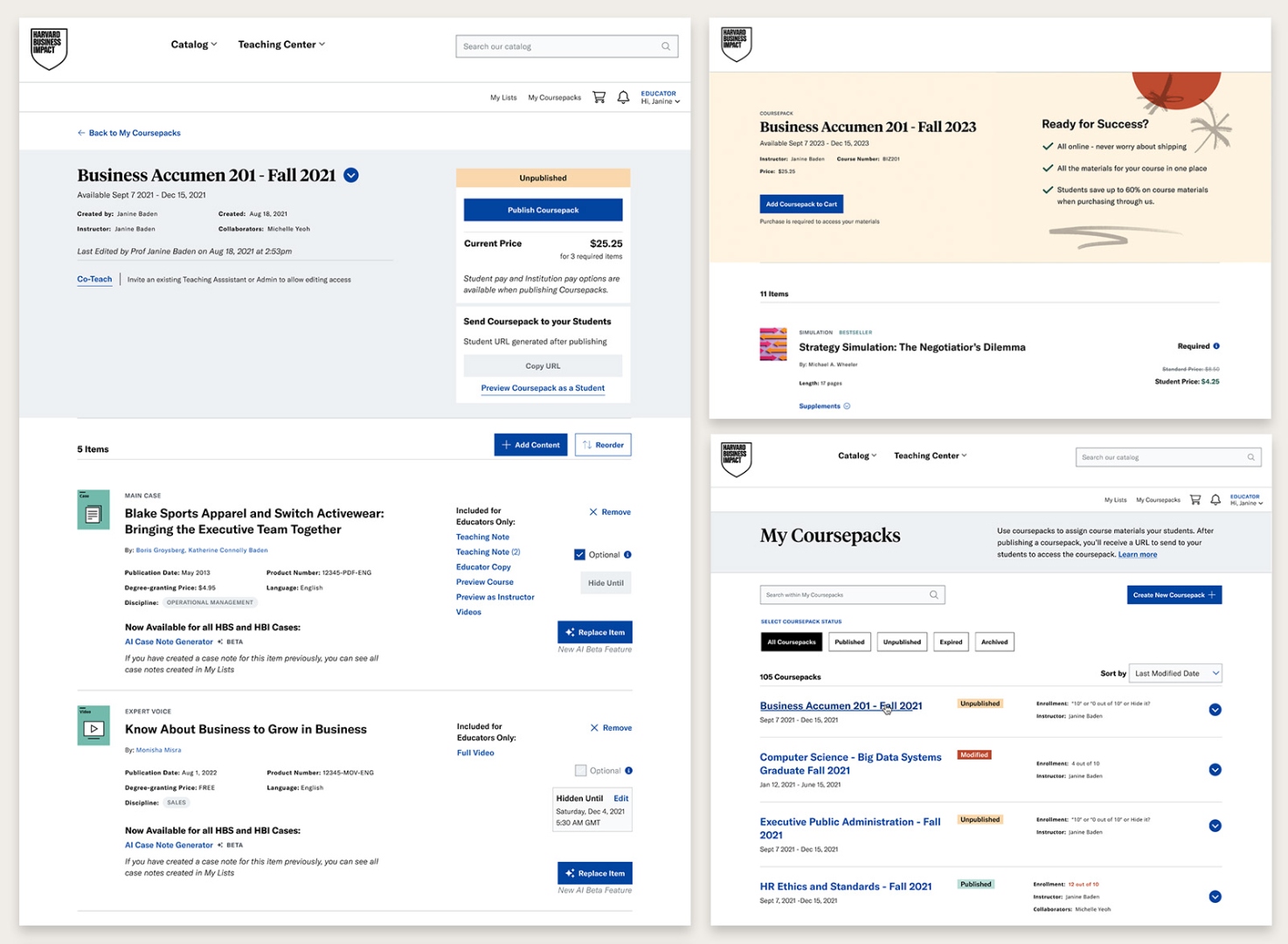
The Coursepack is one of the most-used and most complex pages on HBP's Educator Website. Educators use it to assemble curated material lists for their courses - adding cases, setting permissions, collaborating with administrators and TAs, and sharing with students. But as we redesigned the entirety of the site we realized this page had grown organically over time. The page was a dense, confusing experience that frustrated even experienced users. The redesign wasn't just a visual refresh - it was a structural rethink.
Stakeholders
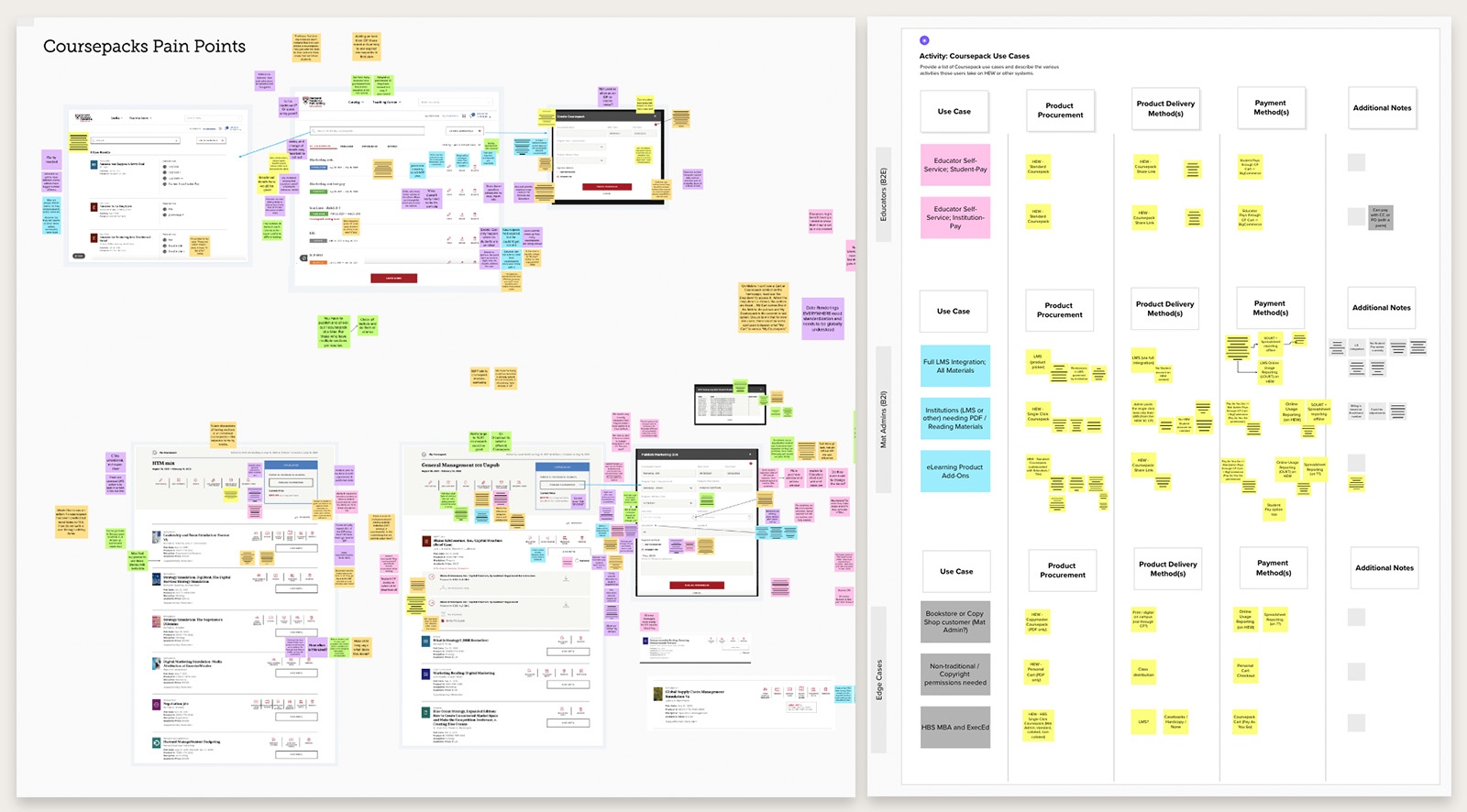
Large page redesigns fail when stakeholders feel surprised. I started with stakeholder workshops to surface every team's priorities, constraints, and fears about the redesign before a single pixel moved. These sessions weren't just diplomatic — they were genuinely useful. I learned things about technical constraints and business requirements I wouldn't have discovered in a design bubble.
Research
Coursepacks serve a diverse group of educators — from business school professors building semester-long Coursepacks to professional development trainers assembling one-day workshops. I conducted user interviews to map the range of use cases and identify pain points. Research consistently pointed to the same core issues: too many steps, unclear feedback when actions completed, and a layout that didn't match the mental model of "I'm building a list."
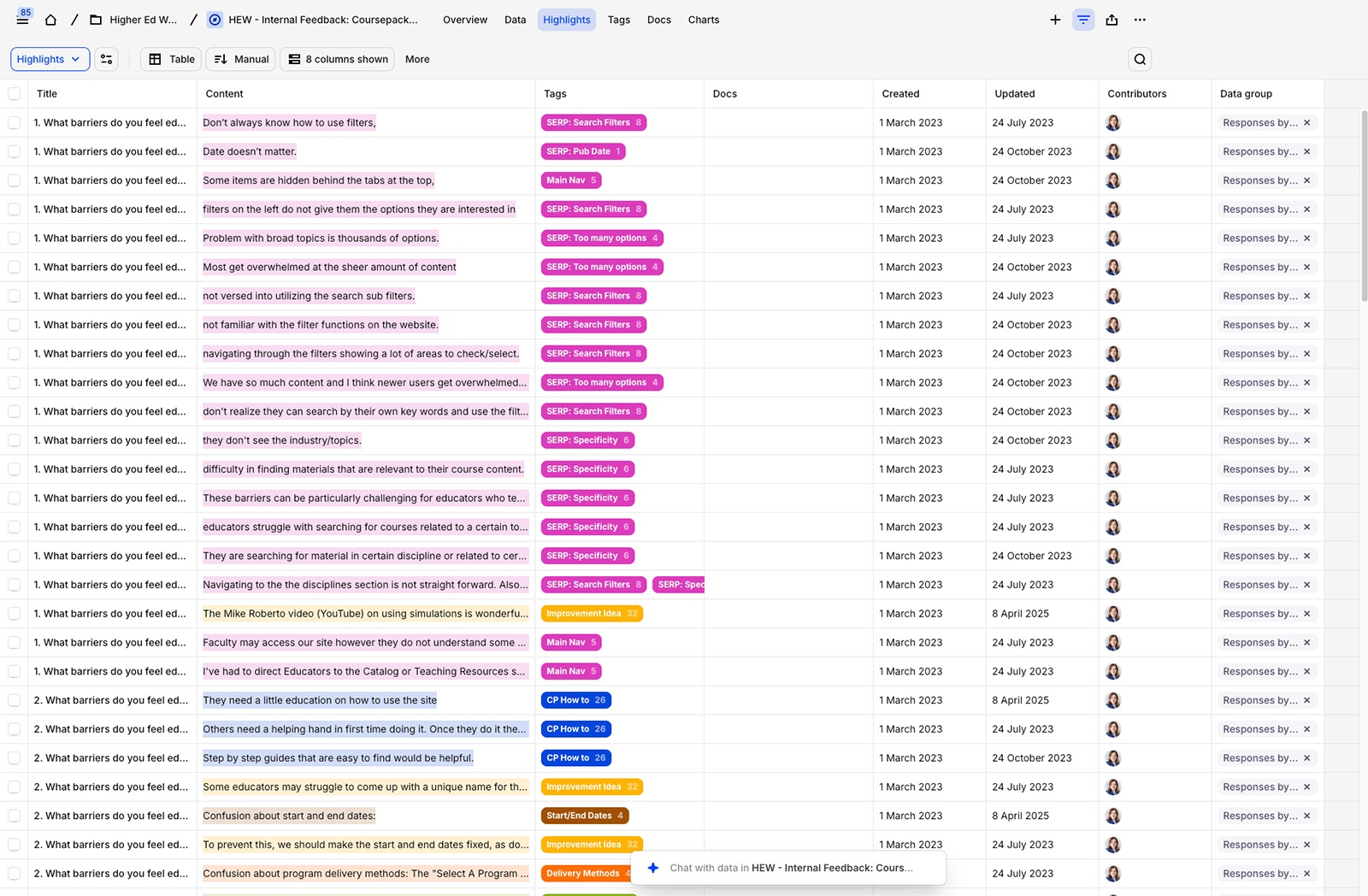
"The layout didn't match the mental model of 'I'm building a list' — educators expected a more sequential, list-oriented experience."
Design Sprints
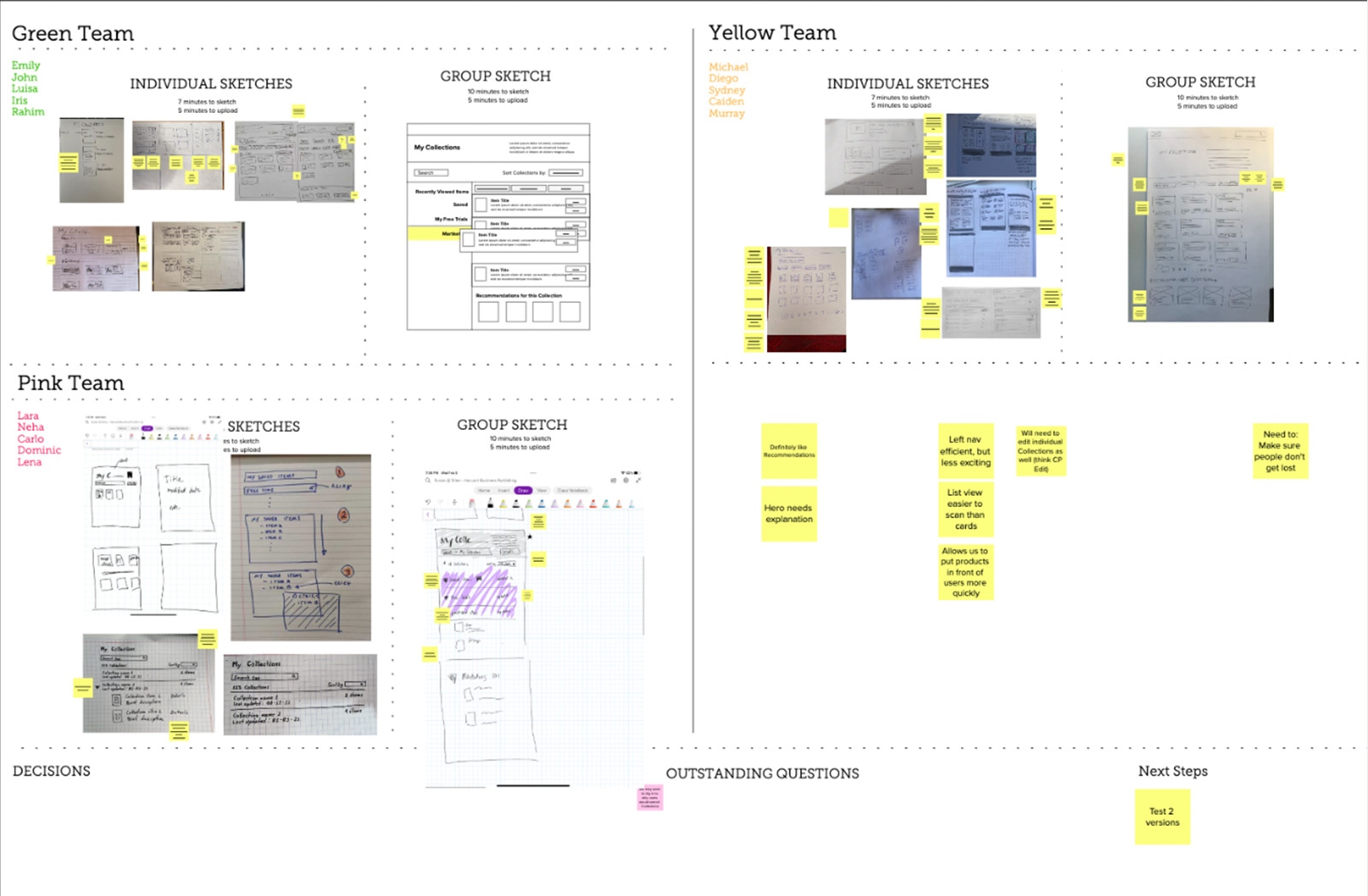
I used design sprint methodology to compress the ideation and validation cycle — testing multiple structural approaches quickly before investing in high-fidelity design. Multiple rounds of prototyping and testing followed, each round tightening the experience based on what we observed.
Redesigning a live, high-traffic page mid-semester required careful coordination with engineering on the release strategy. I worked through edge cases, documented interaction specifications thoroughly, and stayed close to engineering during implementation.
Outcomes
- Complex, high-traffic page redesigned through a full stakeholder-to-launch process
- Stakeholder workshops conducted across Product, Engineering, and Editorial teams
- Multiple rounds of user interviews and prototype testing
- Design sprint methodology applied to accelerate decisions
- Shipped and deployed to live platform
- Foundation for the AI Coursepack Refresh that followed