AI Coursepack Refresh — Helping Educators Update Their Syllabi Faster
A year-long exploration into how AI could help educators keep their Coursepacks fresh — from educator interviews and personas to a closed beta with measurable time savings.
Context
This project started broader than its title suggests. Before we could design any AI feature, we needed to understand what AI integration should even mean for educators on HBP's platform — so we spent the first phase doing general AI research and working to identify where AI could genuinely help. That discovery work took time, and it shaped everything that followed. Over the course of a year, we moved from open-ended questions about educator needs and AI priorities to a focused initiative: using AI to help educators keep their Coursepacks current.
Educators build Coursepacks — personally curated materials for their courses — but keeping them current is time-consuming. When a case becomes dated or a teaching focus shifts, finding comparable replacement materials requires manually searching a deep catalog with no smart assistance. The opportunity that emerged from our research: use AI to recommend similar, newer cases that could refresh a syllabus without disrupting what an educator had already built.
Research
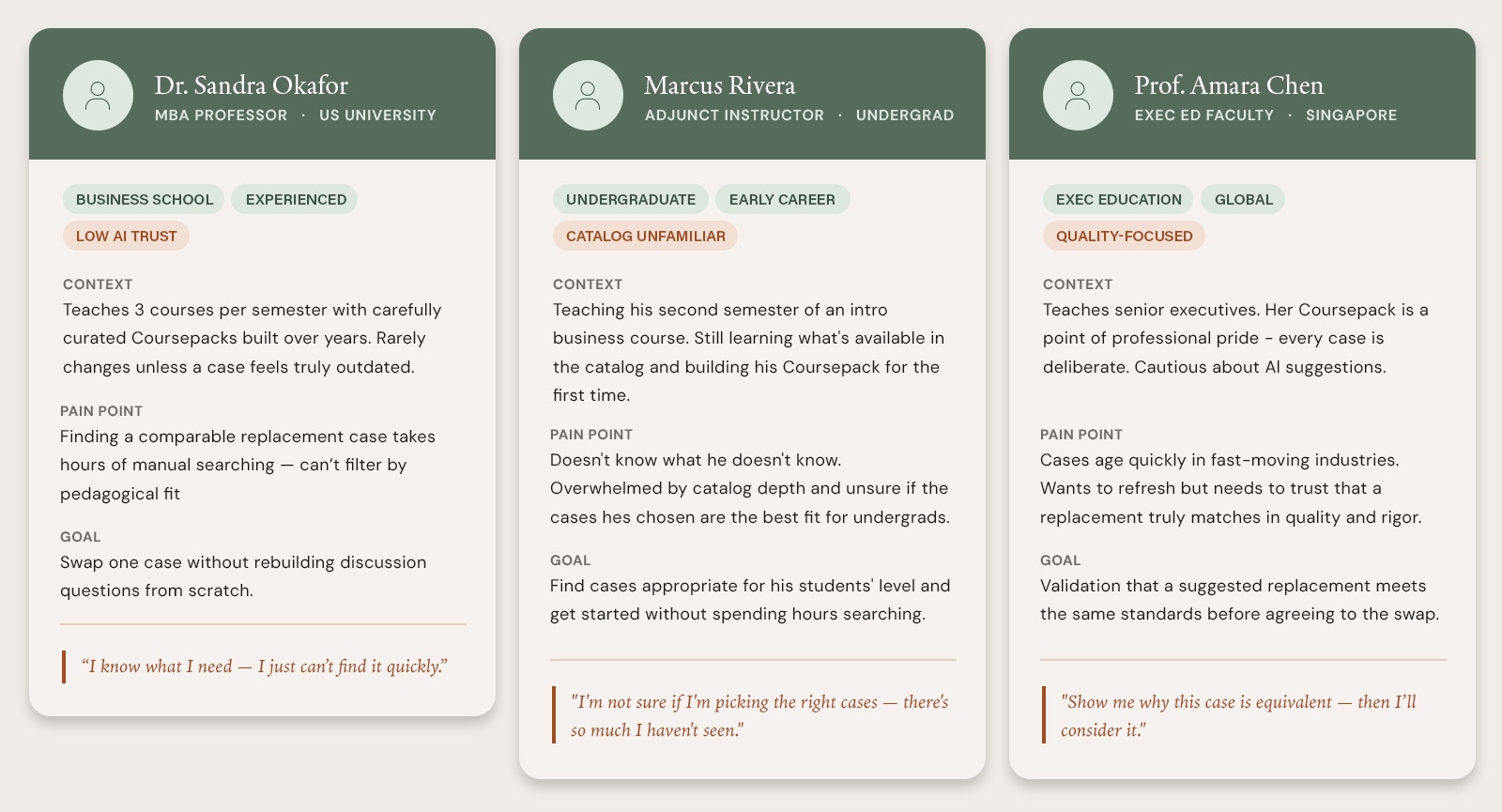
This was a year-long, exploratory project — longer than a typical feature sprint, and that pacing shaped everything. I started with deep educator research: interviews, persona development, and analysis of how AI-help was showing up in adjacent educational tools. The question I kept returning to: what makes an educator trust a recommendation? What does it mean to say "this case is similar" to a faculty member who's spent years building their course around a specific pedagogical arc?
Co-design
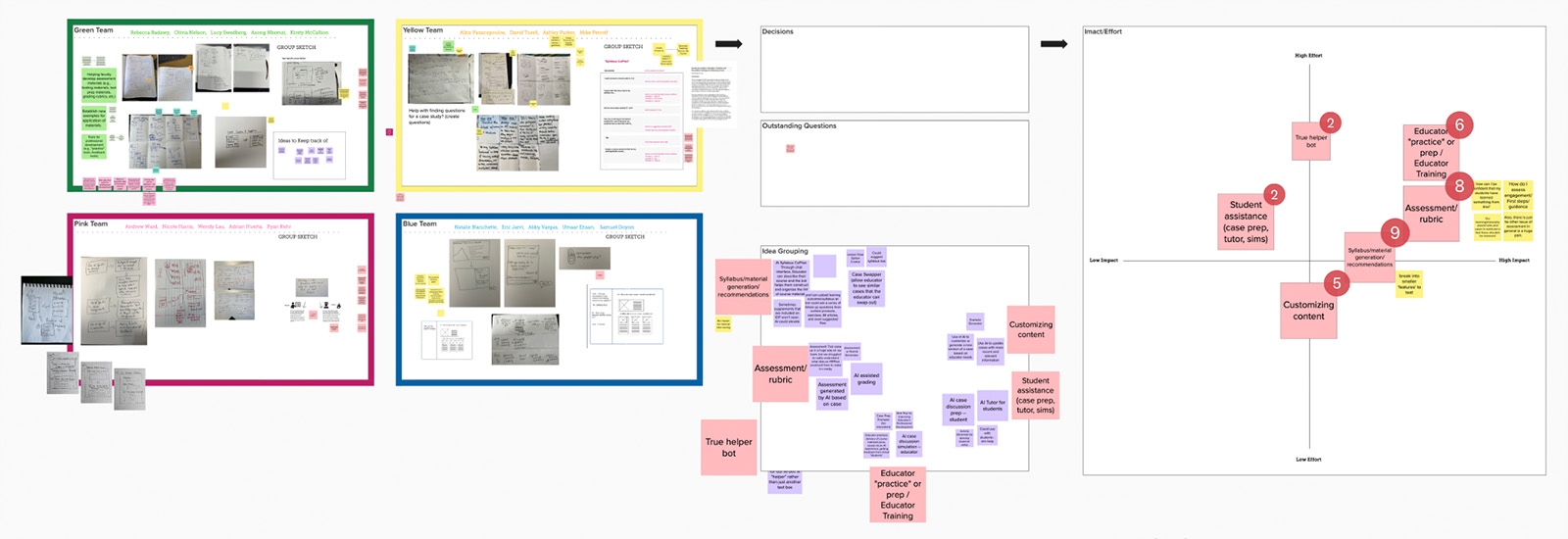
One of the things I'm most proud of on this project is how much we brought educators into the ideation process itself. Rather than designing in isolation and testing at the end, I facilitated co-design sessions where educators helped sketch and react to concepts early. This approach surfaces constraints and use cases that desk research misses. The insights from those sessions directly shaped both the AI model requirements and the interaction model.
"Co-design sessions surfaced constraints and use cases that desk research alone would have missed."
Prototyping
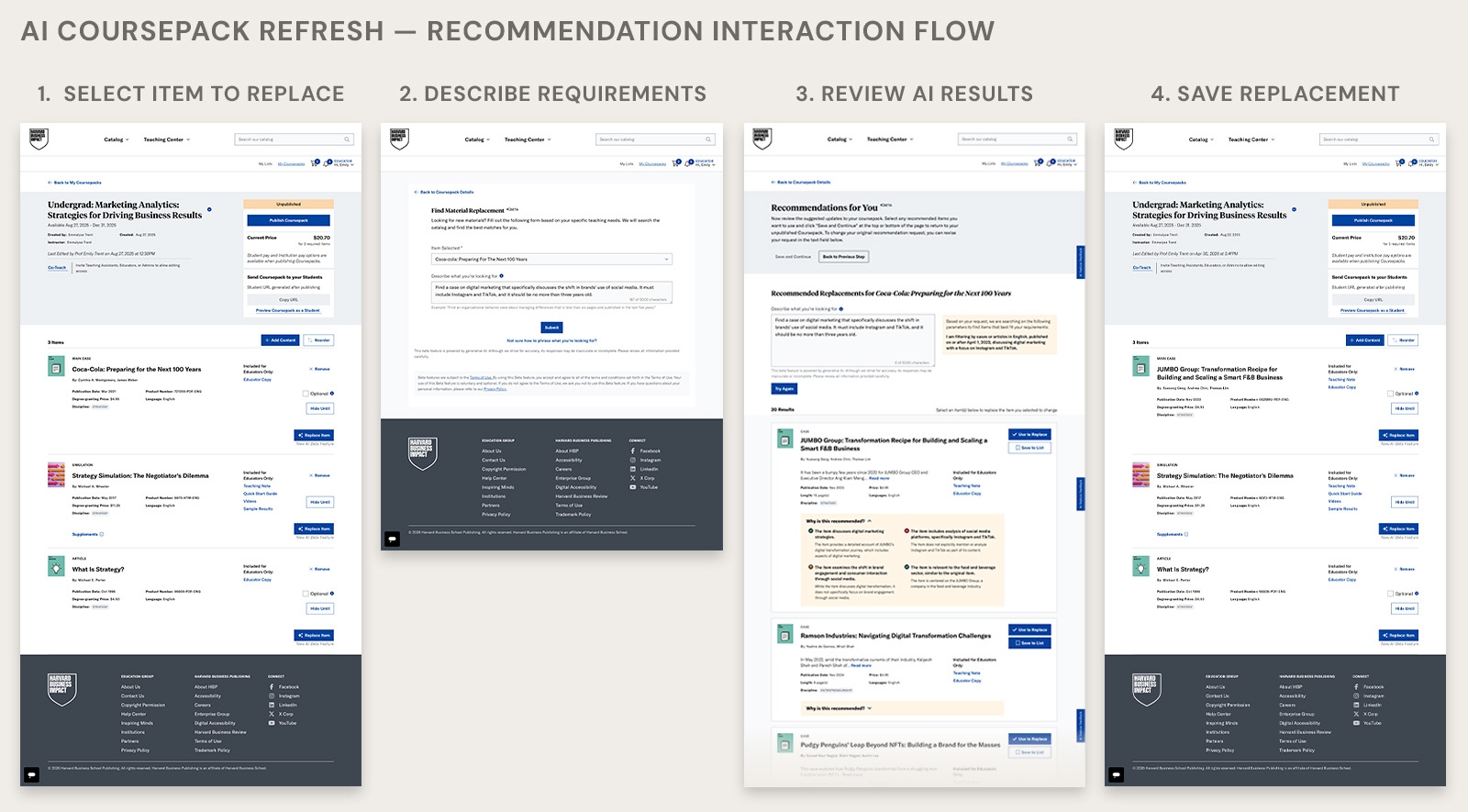
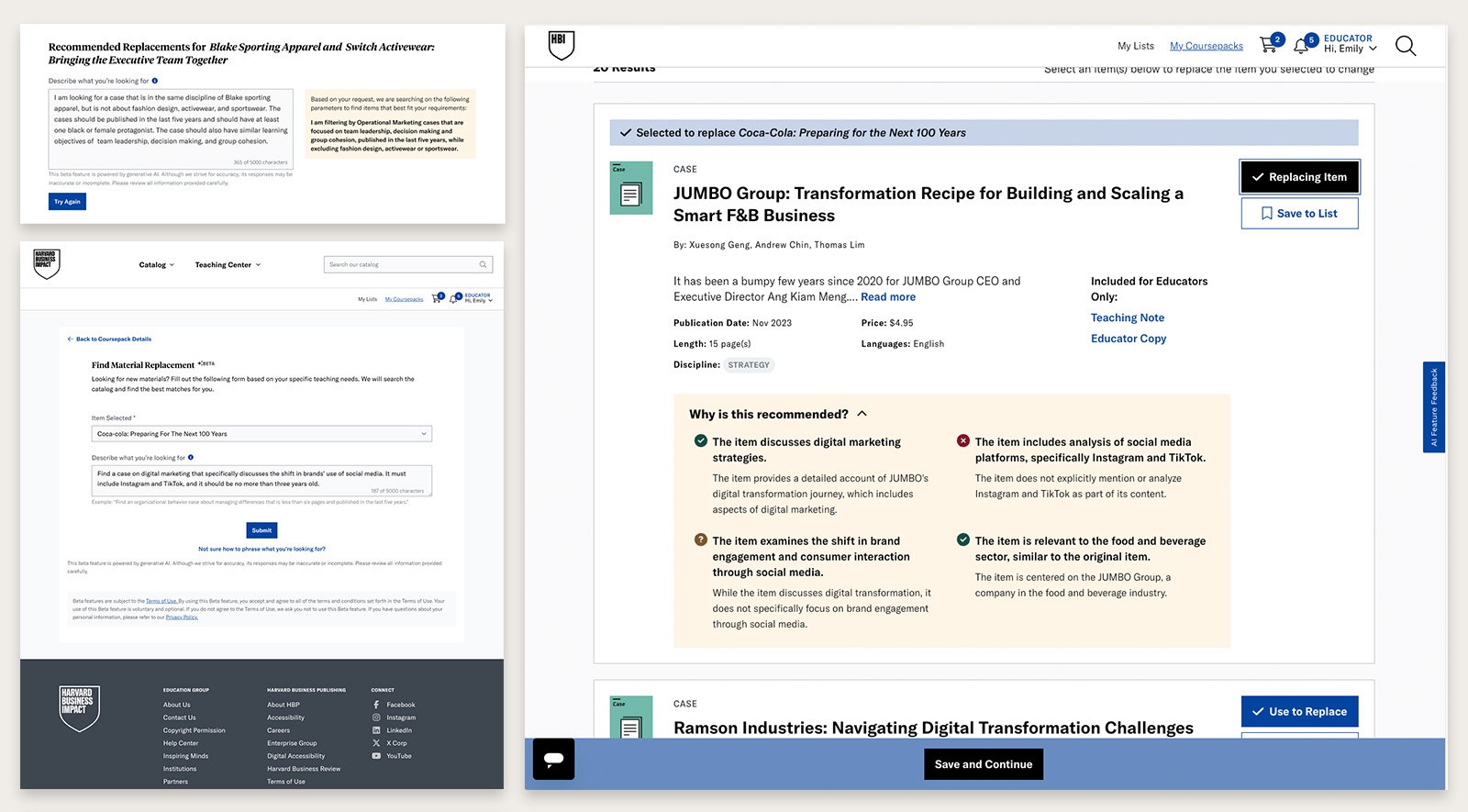
Working from research and co-design, I developed interactive prototypes in Figma and ran moderated testing sessions to validate the core interaction: finding similar cases, previewing them, and adding them to an existing Coursepack with minimal friction. Iteration between testing rounds tightened the experience considerably.
Outcomes
- Year-long research and design process from discovery to closed beta
- Educator personas and AI-help article frameworks informing broader product strategy
- Co-design sessions that shaped both model requirements and interaction design
- Interactive prototypes tested in moderated sessions; iteration between rounds
- Closed beta with positive qualitative feedback